
Texas DPS Motorcycle Practice Test 61
- Questions20
- Correct to pass16
- Passing score80%
- Minimum age15 years
-
1. Where should the rider be looking during a U-turn?
Show answer
Answer B: All the way around toward the point where the turn will finish
A motorcycle follows the eyes, so turning the head to the exit of the turn keeps the machine coming round instead of drifting wide.
-
2. How should your speed behave while you move from one lane into the next?
Show answer
Answer C: Keep it steady or adjust it smoothly to match the traffic in the new lane
A lane change works best as a smooth movement at the speed of the lane you are joining, since sudden braking or acceleration surprises the drivers around you.
-
3. A yellow diamond shows the two edges of the road pinching toward each other. What does it mean?
Show answer
Answer B: The pavement gets narrower but the lanes continue
The road narrows sign warns that the traveled way becomes tighter, leaving less room beside passing vehicles even though no lane is dropped.
-
4. The divided highway ends warning sign means that
Show answer
Answer D: the median separating the directions ends and the road returns to two-way operation
Beyond this sign opposing traffic is no longer separated by a median, so the driver must keep right and expect vehicles approaching in the adjacent lane.
-
5. Trees block the view along the tracks as a driver approaches this sign. What approach speed is correct?

Show answer
Answer B: Slow enough to stop before the nearest rail once a train comes into view
Where the view along the track is obstructed, the only safe speed is one that still leaves stopping distance after a train first becomes visible.
-
6. The front brake lever feels soft and travels almost to the handgrip. What should the rider do?
Show answer
Answer D: Leave the motorcycle where it is until the brake system has been inspected
A spongy lever usually means air or fluid loss in the system, and a brake in that condition can fail completely under hard use.
-
7. Oil is visible running down the front fork tubes. What does that mean?
Show answer
Answer C: A fork seal has failed and the suspension needs repair
Fork oil escaping past a seal means the front suspension is losing its damping, and the oil can also reach the front brake and ruin its grip.
-
8. A driver is following you far too closely. What is the best response?
Show answer
Answer D: Increase your own following distance and let the driver pass when it is safe
More room ahead of you means you can slow gradually instead of braking hard, which reduces the chance of being struck from behind, and letting the driver by removes the problem entirely.
-
9. A sign with a brown background and a white legend guides road users to
Show answer
Answer B: parks, campgrounds and other recreational or cultural sites
Brown is reserved for recreational and cultural interest area signing, such as parks, historic sites and scenic areas.
-
10. You leave a brightly lit service area onto a dark rural road. Why should you slow down for a while?
Show answer
Answer C: Your eyes need time to adjust, so at first you see less
Eyes take a few minutes to adapt from bright light to darkness, and during that time you can see much less than your headlights actually show.
-
11. What is the correct body position for riding over a bump or an obstacle?
Show answer
Answer B: Rise slightly off the seat with your weight on the footrests, absorbing the shock with knees and elbows
Coming slightly off the seat lets your legs and arms work as extra suspension instead of transferring the impact through your body and the handlebars.
-
12. A clutch cable adjusted with no free play at all causes what problem?
Show answer
Answer B: The clutch may slip and never fully engage
Without a small amount of slack the release mechanism keeps a light load on the plates, so they slip instead of transmitting full power.
-
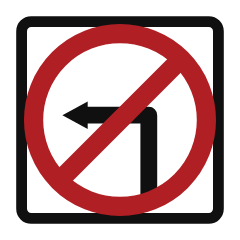
13. No plaque stating days or hours accompanies this sign at the intersection. When does the restriction apply?
Show answer
Answer D: At all times, since nothing limits it to particular periods
A regulatory restriction runs continuously unless a supplemental plaque states the days or hours during which it applies.
-
14. What must you be sure of before you pull out to pass on a two-lane road?
Show answer
Answer A: That the road ahead is clear far enough for the whole pass
You need enough clear road to pull out, pass and return before any oncoming vehicle arrives, and you must judge that distance before you start.
-
15. Where is the clutch lever located on a standard motorcycle?
Show answer
Answer D: On the left handlebar
Squeezing the lever on the left handlebar disengages the clutch and interrupts power between the engine and the rear wheel.
-
16. What fine range applies to a second Texas Move Over or Slow Down violation within five years of the first?
Show answer
Answer A: $1,000 to $2,000
A first violation carries $500 to $1,250, and a second or later violation within five years carries $1,000 to $2,000.
-
17. A deer crosses the road ahead of you and disappears into the trees. What should you expect?
Show answer
Answer A: More animals may follow, since deer usually move in groups
Deer commonly travel in groups, so one animal crossing is a warning that others are close by. Slow down and stay ready to stop well past the point where it crossed.
-
18. Why is it risky to brake hard and steer sharply at the same moment?
Show answer
Answer C: The tires have a limited amount of grip that braking and turning must share
Each tire can deliver only so much grip, and asking it to slow the vehicle and change direction at once can exceed that limit and start a skid.
-
19. You cannot avoid an obstacle lying in the road. At what angle should you try to cross it?
Show answer
Answer D: As close to 90 degrees as possible
Meeting the obstacle squarely keeps the front wheel from being deflected sideways as it climbs over the edge.
-
20. When should a rider avoid a tinted face shield or tinted goggles?
Show answer
Answer C: At night and in other low light conditions
A tint cuts the amount of light reaching the eyes, which makes hazards much harder to pick out once daylight fades.